Does Apollo Have Local Business Owner Contacts? Your Guide to Apollo and LocalPipe
Does Apollo have local business owner contacts? Learn about Apollo's limitations and how LocalPipe excels at finding local business owner data.

Trying to reach local business owners can feel like a puzzle. You know they're out there, running shops and services in your community, but actually getting their direct contact info? That's a whole different story. Many tools focus on big companies and LinkedIn profiles, which often miss these smaller, owner-operated businesses. This guide looks at how Apollo handles business contacts and introduces a tool called LocalPipe that's specifically designed for connecting with local business owners.
Key Takeaways
- Apollo primarily pulls data indexed by LinkedIn, which often doesn't include local business owners who may not have active LinkedIn profiles.
- Finding direct owner contact information for local, owner-operated businesses is a common challenge that generic B2B databases struggle to solve.
- LocalPipe is built specifically to address this gap, focusing on scraping and enriching data directly from sources like Google Maps.
- The tool provides verified owner names and direct email addresses, making outreach more personal and effective for local businesses.
- For campaigns targeting local businesses, LocalPipe offers a more specialized and potentially cost-effective solution compared to the broad approach of platforms like Apollo.
Understanding Local Business Contact Data
The Challenge of Finding Local Business Owners
Reaching out to local businesses can feel like trying to find a needle in a haystack sometimes. You know the businesses are there – they're the shops on the corner, the service providers in your neighborhood, the restaurants you drive past every day. But actually getting in touch with the person who makes the decisions? That's a whole different story. It's not like these places always have a dedicated sales team or a public relations department. Often, it's just the owner, juggling a million things at once.
Why Generic B2B Databases Fall Short
Many tools out there are built for larger companies, the ones with a big online presence and lots of employees. They're great at pulling data from places like LinkedIn. But think about your local plumber or the owner of a small bakery. Do they really have a detailed LinkedIn profile? Probably not. These generic databases often miss these businesses entirely, or they give you outdated or incorrect information. It's like using a fishing net designed for whales to catch minnows – you're just not going to get what you're looking for.
The Importance of Direct Owner Contact
When you're trying to connect with a local business, getting directly to the owner is usually the most effective path. They're the ones with the final say on services, partnerships, or any changes. Sending an email to a generic 'info@' address might get lost in the shuffle or ignored. But an email addressed to the owner, mentioning their business specifically? That has a much better chance of being seen and considered. It shows you've done your homework and respect their time. This direct line is key for building trust and getting a real conversation started. Finding verified contact information is a big part of this process using official sources.
The reality for many small, local businesses is that the owner is the business. They wear all the hats – from operations to marketing to customer service. This means bypassing layers of management, which often don't exist, is the most direct route to making a connection.
Apollo's Capabilities for Business Contacts
When you're looking for business contacts, Apollo.io is often one of the first places people think of. It's a pretty powerful platform, especially if you're targeting businesses that are active on LinkedIn. Apollo really shines when it comes to finding contacts within larger companies or those with a strong online presence, often indexed through LinkedIn.
Apollo's Primary Focus on LinkedIn-Indexed Data
Apollo's strength lies in its massive database, which is heavily populated by information scraped from LinkedIn. This means it's fantastic for finding decision-makers in companies where employees actively maintain their professional profiles. You can search by industry, company size, location, and job title, and Apollo will pull up matching profiles and contact information. It's a go-to for many sales and marketing teams because of this focus.
Limitations for Local, Owner-Operated Businesses
However, Apollo's reliance on LinkedIn data creates a blind spot when it comes to local, owner-operated businesses. Think about your local plumber, the owner of a small bakery, or a neighborhood dentist. These individuals are often too busy running their business to maintain active LinkedIn profiles. Consequently, Apollo's ability to find direct owner contact information for these types of businesses can be quite limited. You might find the business listed, but getting the owner's direct email or phone number is often a challenge.
Comparing Apollo's Owner Find Rate
To put it simply, the owner-name find rate for local businesses on Apollo tends to be quite low. While it might be around 20% or even less for this specific niche, it's a stark contrast to platforms built specifically for local outreach. This means a significant portion of your outreach efforts might hit a wall if you're solely relying on Apollo for local business owner contacts. It's not that Apollo is a bad tool; it's just that its design and data sources aren't optimized for this particular segment of the market.
The core issue isn't a lack of data, but a mismatch in data sources. Apollo excels at indexing professional networks like LinkedIn, which many local business owners don't actively participate in. This structural difference means that while Apollo can find contacts for many businesses, it often struggles to pinpoint the actual owner of a small, local establishment.
Here's a rough comparison you might see:
| Platform | Typical Owner Name Find Rate (Local Businesses) |
|---|---|
| Apollo | ~20% |
| LocalPipe | ~75% (or higher with specific targeting) |
This difference in find rates is a major reason why many outreach professionals find themselves looking for alternative solutions when targeting local businesses. While Apollo's Chrome extension can be helpful for finding emails and phone numbers on websites it indexes [caa8], it doesn't solve the fundamental problem of identifying the owner in the first place for businesses not well-represented on professional networks.
Introducing LocalPipe for Local Business Outreach
So, we've talked about how Apollo is great for certain kinds of business contacts, especially those you find on LinkedIn. But what about the local plumber down the street, or the boutique shop owner who's always busy? That's where things get a bit trickier, and honestly, where tools like Apollo can fall short. This is exactly the gap that LocalPipe was built to fill.
LocalPipe's Specialization in Local Businesses
LocalPipe is designed from the ground up with one thing in mind: connecting you with local business owners. Think about it – most of these folks aren't actively updating LinkedIn profiles or aren't indexed in the massive B2B databases that tools like Apollo rely on. They're busy running their actual businesses. LocalPipe understands this. It focuses on businesses listed on Google Maps, which is where most local customers find them. It’s like Apollo, but specifically for the local business world. This means you're not sifting through irrelevant data; you're getting straight to the people who matter for local outreach.
The Core Workflow: Scrape, Enrich, Send
Using LocalPipe is pretty straightforward. It follows a simple three-step process that gets you from a search to a usable contact list quickly. You don't need to be a tech wizard to make it work.
- Scrape Google Maps: You start by searching for the types of local businesses you want to reach in specific locations. LocalPipe pulls this information directly from Google Maps, giving you current, real-world business listings.
- Enrich Contact Info: This is the magic step. LocalPipe takes the list of businesses you scraped and adds verified owner names and direct email addresses. This is the part that really makes outreach possible.
- Export and Send: Once your list is enriched, you can export it as a clean CSV file. This file is ready to be uploaded into your preferred cold email platform, like Smartlead or others, so you can start sending personalized messages.
Key Data Points LocalPipe Provides
When you use LocalPipe, you're not just getting a list of business names. You're getting actionable data points that make your outreach much more effective. The goal is always to reach the decision-maker directly.
- Business Owner Name: Essential for personalizing your emails. Knowing who you're talking to makes a huge difference.
- Verified Owner Email: This is the direct email address of the business owner, not a generic 'info@' inbox. This significantly increases your chances of getting a response.
- Business Email: The general contact email for the business, which can still be useful.
- Business Owner Phone (Optional): If you plan on making calls, having the owner's direct number is incredibly helpful.
The real challenge for many businesses trying to reach local owners is that these individuals are often not active on platforms like LinkedIn. They're focused on their day-to-day operations. Tools that rely solely on LinkedIn data will miss a huge segment of the market. LocalPipe bridges this gap by tapping into Google Maps data, which is a more accurate reflection of where local businesses actually are and who runs them.
This focused approach means you spend less time searching and more time connecting with the right people. It’s a much more efficient way to handle outreach for local service businesses, whether you're in plumbing services or any other trade.
The LocalPipe Enrichment Process

So, you've got your list of local businesses from Google Maps. That's a great start, but raw data isn't going to get you very far on its own. You need contact information, right? This is where LocalPipe's enrichment process really shines.
Scraping Google Maps for Business Listings
LocalPipe starts by pulling data directly from Google Maps. Think of it like this: you tell it what kind of business you're looking for – say, plumbers – and where you want to find them, like in Austin, Texas. LocalPipe then goes out and grabs a list of those businesses. It's not pulling from some old, dusty database; it's getting current, real-world results. You can even add filters to narrow things down if you need to be more specific. After a minute or two, you'll have a list of businesses, and it's usually pretty clean right out of the gate.
Enriching Data with Owner Names and Emails
Once you have that initial list, the real magic happens. LocalPipe takes each business on your list and works to find the owner's name and their direct email address. This is super important because sending an email directly to the owner, like dan@austinsomeplumbers.com, is way more effective than sending it to a generic info@ inbox. You can also choose to get the general business email if that's all that's available. This whole process usually takes about a minute for every 100 businesses on your list, so it's pretty quick.
Targeting Specific Roles and Using Fallback Mode
LocalPipe gives you options for who you want to target. Most of the time, you'll want the business owner, as they're the ones who can make decisions. But maybe you need to reach a property manager or a clinic administrator? You can specify that. There's also a "waterfall" option where you can list multiple titles, and LocalPipe will try to find the first one, then move to the next if the first isn't found. This is really helpful for making sure you get contact info. Enabling "fallback mode" is a smart move because it helps increase the chances of finding some kind of contact information, even if the primary target isn't available. This whole enrichment process is designed to give you the best possible chance to connect with the right person, making your outreach efforts much more effective. You can even get comprehensive demographic, firmographic, and real-time signal data to enhance your records.
Here's a quick look at what you might expect from an enrichment run:
| Data Point | Found Rate |
|---|---|
| Verified Emails | ~61% |
| Owner Names | ~84% |
| Business Emails | ~95% |
This means you'll have a name for almost every lead, and a solid percentage will have a direct email, which is great for personalization. It's a much better approach than just hoping generic B2B databases have what you need, especially for local businesses. You can also explore waterfall enrichment in Apollo.io for a similar concept, though LocalPipe is built specifically for the local business niche.
Comparing LocalPipe and Apollo for Local Leads
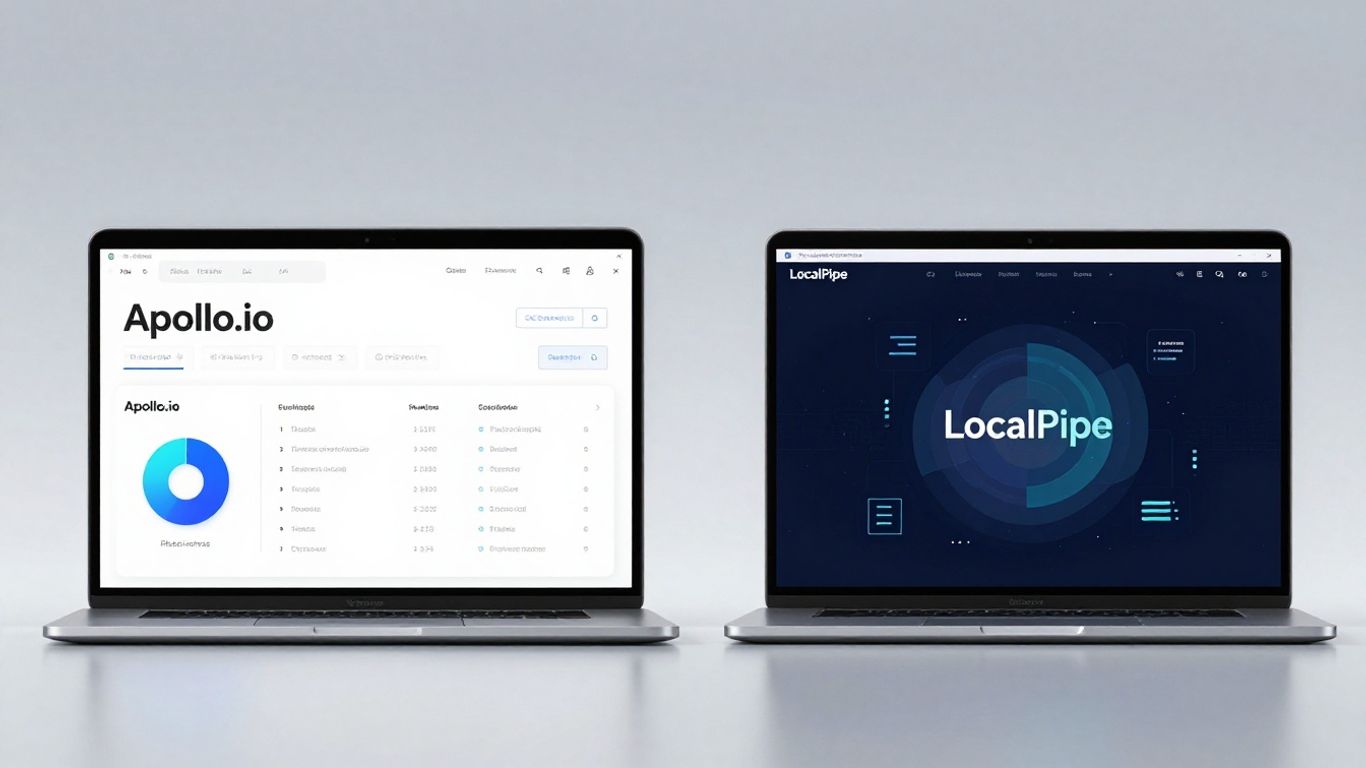
When you're trying to reach local business owners, it's easy to get confused about which tools actually work best. Apollo is a big name in the B2B data world, and it's great for finding contacts at companies where people are active on LinkedIn. But here's the thing: most local, owner-operated businesses, like your neighborhood plumber or a small landscaping company, aren't really on LinkedIn. Their owners are busy running the business, not updating profiles.
Coverage Differences: Local vs. LinkedIn
Apollo's strength lies in its massive database indexed from LinkedIn. This means it's fantastic for finding decision-makers in larger corporations or tech companies. However, when it comes to the corner store or the local auto repair shop, the data can be pretty thin. You might find a generic company contact, but getting directly to the owner is often a long shot. Apollo's owner-name find rate on local businesses is typically around 20%.
LocalPipe, on the other hand, is built from the ground up to tackle this specific problem. It scrapes directly from sources like Google Maps, where these local businesses actually list themselves. This gives it a much wider net for this specific type of lead. For instance, LocalPipe can achieve an owner-name find rate of about 75% for local businesses, which is a huge difference.
Here's a quick look at how they stack up:
| Feature | Apollo | LocalPipe |
|---|---|---|
| Primary Data Source | Google Maps, Local Directories | |
| Local Owner Coverage | Low (~20% owner name find rate) | High (~75% owner name find rate) |
| Data Type | Broad B2B, often corporate | Hyper-focused on local, owner-operated businesses |
| Best For | LinkedIn-active professionals, SaaS buyers | Local service businesses, trades, small operators |
Accuracy and Verification Standards
Accuracy is key, right? You don't want to waste time and money reaching out to bad contacts. Apollo does a decent job with verification, but its focus isn't on the hyper-local market. LocalPipe puts a strong emphasis on verification, especially for emails. They use a multi-step process, often involving services like MillionVerifier and ZeroBounce, aiming for really low bounce rates – sometimes as low as 0.11%. This means the emails you get are much more likely to be valid and reach the intended recipient.
When you're trying to reach a local business owner, the goal is direct contact. Generic emails like 'info@' or 'contact@' often get lost in the shuffle or are handled by receptionists. Tools that specialize in finding the owner's direct email and phone number are far more effective for this niche.
Cost-Effectiveness for Local Outreach
For local outreach, cost can add up quickly, especially if you're using multiple tools. Apollo often works on a credit system or subscription that might not be optimized for finding just a few local owners among thousands of contacts. LocalPipe, however, often uses a 'pay-on-find' model. This means you're not paying for data that doesn't pan out. You only consume credits when they successfully enrich a lead with the owner's contact information. This can make it significantly more budget-friendly for campaigns focused purely on local businesses. Plus, they often have free credits to start, so you can test the waters without any upfront commitment, much like how you might explore a new photography technique before investing in expensive gear The Fall of Icarus.
Ultimately, if your target is local businesses, LocalPipe is designed specifically for that job. While Apollo is a powerful tool for broader B2B prospecting, it's like using a sledgehammer to crack a nut when you only need to reach the owner of the local bakery. For a more targeted and cost-effective approach to local lead generation, LocalPipe often makes more sense. You can find more details about their service in their Universal Registration Document.
Maximizing Your Outreach with LocalPipe
So you've got your list of local businesses, and LocalPipe has worked its magic to find you the owner's name and email. Now what? It's all about using that data smartly to actually connect with these business owners. This isn't just about having a list; it's about making that list work for you.
Leveraging Verified Owner Emails
This is where the real power lies. LocalPipe doesn't just give you any email; it aims for verified direct emails of the business owners. Think about it – an email like dan@austinsomeplumbers.com is way more likely to get opened than a generic info@ address. This direct line is gold.
- Personalize from the start: Use the owner's name in the subject line and the greeting. It immediately makes your email stand out.
- Build trust: A direct email shows you've done your homework and respect their time.
- Higher open rates: Because it's a verified, direct inbox, people are more likely to see and open your message.
The goal is to cut through the noise. Generic emails get lost. Direct, verified owner emails are your best shot at getting a response from busy local business owners.
Personalizing Outreach with Owner Names
We touched on this, but it's worth repeating. Having the owner's name is a game-changer for personalization. It moves your outreach from a mass blast to a one-on-one conversation.
- Greeting: Start with "Hi [Owner Name]," instead of "Dear Business Owner."
- Context: Reference something specific about their business if possible, using their name to tie it back.
- Follow-up: If you're following up, mentioning their name again reinforces that you're talking to them, not just a company.
The owner name coverage from LocalPipe is typically quite high, often around 84% or more, meaning you'll have a name for almost every email you send. This makes personalization a standard part of your process, not an exception.
Integrating LocalPipe into Your Workflow
Getting the data is one thing, but making it a smooth part of your daily outreach is key. LocalPipe is designed to fit right in.
- Scrape & Enrich: Use LocalPipe to get your list of businesses and then enrich it with owner contact details. This usually takes just a few minutes.
- Export: Download your enriched list as a clean CSV file.
- Import: Load this CSV directly into your preferred cold email sending platform (like Smartlead, Instantly, or others).
- Send & Track: Launch your personalized campaigns and monitor your results.
This streamlined process means you can go from a Google Maps search to sending personalized emails in under five minutes. It's about making the data actionable without adding a ton of extra steps to your already busy schedule.
Wrapping It Up
So, can Apollo find local business owner contacts? Not really, not in the way you might hope. Apollo is great for B2B contacts you find on LinkedIn, but for the local plumber or the neighborhood dentist, it often falls short. That's where tools like LocalPipe really shine. They're built specifically to dig up those direct owner emails and names from places like Google Maps, which Apollo just isn't designed for. If you're serious about reaching the actual decision-makers at local businesses, you'll likely find that a dedicated tool is the way to go. It cuts through the noise and gets you straight to the person who matters.
Frequently Asked Questions
What is Apollo good for?
Apollo is a great tool for finding business contacts, especially if you're looking for people who are active on LinkedIn. It's really good at pulling information from LinkedIn profiles, which is helpful for many types of business outreach.
Why might Apollo not be the best for local businesses?
Many local business owners, like plumbers or small shop owners, don't use LinkedIn much. Because Apollo focuses on LinkedIn data, it often misses these local owners or provides less accurate contact info for them. It's like trying to find a specific book in a library that only stocks magazines.
What makes LocalPipe different for local businesses?
LocalPipe is built specifically for local businesses you find on Google Maps. It's designed to find the actual owner's name and direct email, not just a general company email. Think of it as a specialized tool for a specific job, while Apollo is more of a general tool.
How does LocalPipe find contact information?
LocalPipe starts by searching Google Maps for businesses you're interested in. Then, it works to find the owner's name and their direct email address. It's like a detective that looks up businesses on a map and then digs to find out who's really in charge and how to reach them directly.
Can I use LocalPipe to find specific job titles, not just owners?
Yes! While finding the owner is its main strength, LocalPipe can also help you find people with specific job titles within a local business, like a property manager or an office administrator. It even has a 'fallback' option to try for one title and then move to another if the first isn't found.
Is LocalPipe more affordable for reaching local businesses?
For reaching local business owners, LocalPipe is often more cost-effective. Since it focuses on getting you the direct owner's contact info, which Apollo struggles with for local businesses, you're more likely to get useful contacts without wasting money on generic emails or people who can't make decisions.